Auction ends Monday, 13 April. Sell with us in our next auction.
rgba(0,0,0,1)
rgba(255,255,255,1)

65,000+ lots sold - £15m+ in rum enjoyed worldwide

Offices in Scotland, London & Netherlands

Rum lovers in 75+ countries
Few names in independent rum bottling carry the quiet authority of Bristol Classic Rum. Long before rum occupied centre stage in the world of fine spirits, founder John Barrett was laying the foundations for a philosophy built on patience and a deep respect for the liquid itself.
In this conversation with Rum Auctioneer, Barrett reflected on more than five decades in the trade – from his early days in wine and cognac to the moments that defined Bristol Classic Rum as one of the most influential independent rum bottlers of the modern era.
Read more below on John’s lifelong fascination with how spirit evolves over time, and why rum, in all its complexity, deserved to be treated with the same seriousness as the world’s most revered whiskies.
John Barrett’s journey into spirits began well before rum entered the picture. After gaining his diploma in the early 1970s, he found himself immersed in the traditional wine trade, selling Bordeaux, Port and German wines. A chance opportunity soon set him on a different path.
A Bristol merchant approached Barrett with several casks of Cognac that needed to be sold. Though Cognac was not yet his speciality, he took on the challenge and quickly developed a deep interest in the category. This led to a formative relationship with Bernard Hine of Thomas Hine & Co, who became a key mentor.
By 1973, Barrett had co-founded the Bristol Brandy Company, trading in Cognac, Armagnac and other specialist spirits. The business eventually dissolved in 1994, and Barrett once again set out independently, forming Bristol Spirits Ltd. – the foundation on which Bristol Classic Rum would later be built.
When Bristol Spirits began operating, whisky dominated the independent bottling landscape. Rum, by contrast, remained largely overlooked as a serious sipping spirit. For Barrett, this gap was part of the opportunity.
Rather than competing in a crowded whisky market, Bristol Spirits began to explore rum through trusted industry connections. Early introductions to Caribbean stocks, combined with demand from overseas markets such as Japan, led to the company’s first rum bottlings.
We were possibly ten years ahead of our time. It was not easy. Earlier, people thought [rum] should be, you know, sailors and, you know, ‘yo ho ho’, as opposed to a really serious quality spirit which really fine rum can be. And we slowly sort of started building up a following, and it just grew.
Building a following took time, education and consistency, but the category’s depth soon became clear.
One of the defining features of Bristol Classic Rum is its commitment to ageing spirits in the UK. This approach is rooted in climate, tradition and a detailed understanding of how spirit behaves in cask over time.
Cool temperatures and higher humidity create conditions that differ markedly from tropical ageing. In UK warehouses, spirit tends to lose strength gradually while retaining volume, producing a slower, more controlled maturation.
When you put casks into wet warehousing, they might actually increase in volume but diminish in strength. We've had casks which blew their bungs out because they're so full now because they've absorbed moisture from the atmosphere.
So the atmospheric conditions of warehousing casks is very important. You want humidity. You don't want too much of it, but you do want it. That brings... a natural reduction in the strength of the liquor. But you're not losing the volume, which our friends in the Caribbean are - where you have maybe 4 or 5% a year of volume lost, and no diminishing in the strength. I am very keen on UK maturation because of the natural reduction in strength and the retention of the volume.
For Bristol Spirits, maturing rum in the UK also allows greater oversight of wood management. Young spirit can be shipped, filled into carefully selected casks, and monitored closely throughout its life. This flexibility extends to the choice of wood – whether ex-bourbon, whisky, sherry or other seasoned casks – and reflects the UK’s long-standing expertise in warehousing, cooperage and bottling. UK maturation remains central to Bristol Classic Rum’s identity and house style.
Few distilleries are as closely associated with Bristol Classic Rum as Caroni. Barrett first visited the Trinidad distillery in 2001, at a time when its future was already uncertain. Though Caroni produced richly characterful rum, it struggled commercially, resulting in significant stocks maturing on site.
When opportunities arose to acquire casks following the distillery’s closure, Bristol Spirits secured substantial parcels and brought them to the UK for further maturation. Some casks already had extensive tropical ageing, making their continued development a careful balancing act.
It actually was quite an unusual position for us as a brand that prioritises UK maturation, because some of these casks already had, say, fifteen years of maturation on the island and then came back in for another ten.... What you don't want is the maturation to go on for too long and then for the stock to become too woody. But by bringing it to the UK, we've slowed the loss and increased the natural fall in strength, which I am keen on.
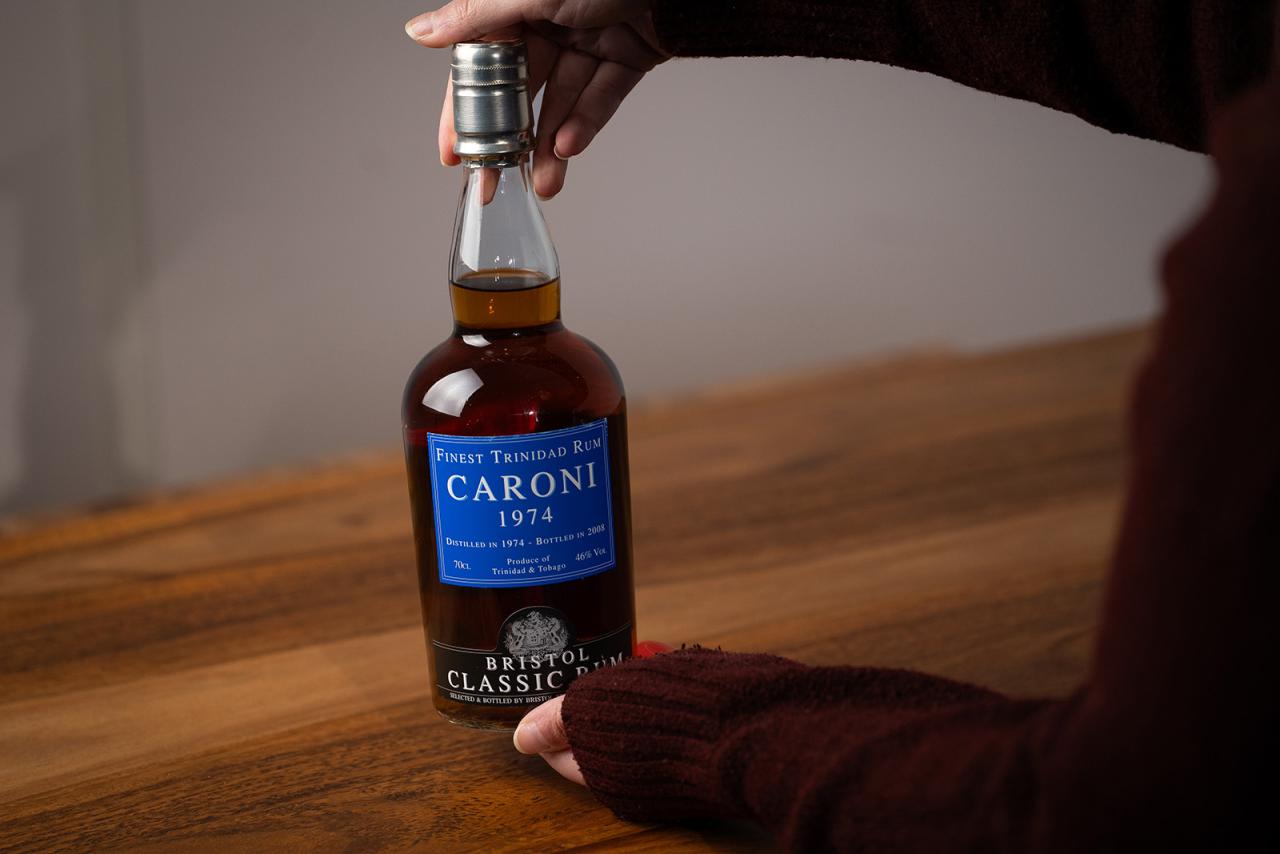
I thought this ‘74 [Caroni] was reaching a point where it needed bottling. So we bottled that pretty soon after it arrived, and it gave us some sort of marker to measure others against that.
The 1974 Caroni became an early reference point for the range, while later releases, particularly from 1989, demonstrated how structure, balance and vitality could be preserved through thoughtful maturation and timely bottling.
People have asked me, is [the 1974] your favourite Caroni? And the answer is no. Of all the Caroni we bottled, the ‘89 is my particular favourite. I mean the '74 is very lovely, but you can see it is aged spirit. Whereas the ‘89 has more balance, a little more life to it, a little more finesse.... People refer to [the 1974], quite rightly, as being delicious rum. But compare it with the ‘89 and you would see the difference.
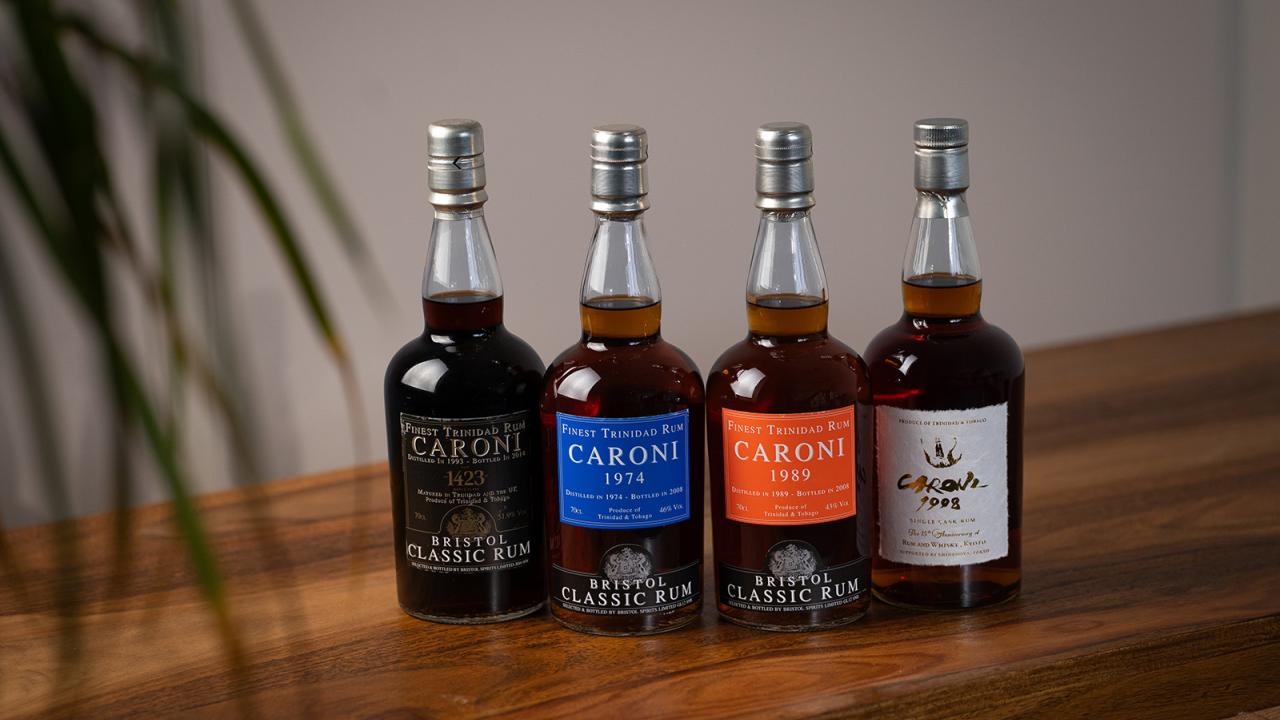
Many Bristol Classic releases, including the 1974 Caroni, 1980 Port Mourant, 1974 Jamaica and 1975 Demerara, have become benchmarks for the brand. Barrett attributes the success of these releases not to prediction or hype, but to relationships, experience and constant tasting.
The ‘75 Demerara was a joy. I mean, it was so luscious in flavour, so full on the palate. It really was quite splendid.
Stocks are sourced through long-standing industry contacts, from distilleries, warehouses and merchants for whom small volumes may not be commercially viable. Decisions about when to bottle are guided as much by flavour as by practical realities.
Barrett has consistently favoured bottling at measured strengths, typically in the mid-to-high 40% range.
I would suggest it is far better to let the experts adjust the strengths properly and then have a really pleasant, sensible, well produced quality product. I've seen some rums being offered at what I consider to be dangerous strength, 70% plus. You actually will battle an imbalance in the spirit, which is not just alcohol. It's the other elements, the woods, the tannins, the extracts, the development of the fruit, the cane. This is what's so important.
Similarly, Bristol Spirits often releases small batches rather than single casks, blending a handful of compatible casks to create balance, consistency and sufficient volume for an international audience.
After decades of working with maturing spirit, Barrett describes ageing as a curve rather than a straight line. Quality builds, reaches a peak, and can decline if left too long in wood.
It can be too old and you get diminished quality. You get all flavours, you get bad woods, you get all these funny things that can happen. You have to catch the spirit at the right time. And that's why constant tasting or constant nosing is so important. Looking at cask samples all the time. So you can see how the spirit is maturing, see how the strength is falling, coming to a decision as to whether this is ready or not.
This philosophy underpins Bristol Classic’s approach to long-aged stocks. Regular sampling, close monitoring of strength and structure, and restraint are essential to ensure rums are bottled at their best rather than their oldest.
Many of Bristol Classic Rum’s most celebrated releases come from distilleries that no longer exist. For Barrett, bottling these spirits at their peak is a meaningful way to preserve rum history.
The history is fascinating, and books and artifacts and parts of stills, all that sort of thing – but the actual liquor itself that's been bottled at its peak at its time, is, I think, the best advertisement you will make for it.
The growing global community of rum enthusiasts, writers and collectors has helped bring greater attention to these lost styles, while also supporting the wider category.
But despite his focus on aged and historic rum, Barrett is quick to emphasise rum’s versatility. It can be enjoyed young or old, mixed or neat, casually or contemplatively.
I see [rum as a] versatile spirit. I mean, you can drink a young rum, you can have a three year old, a five year old with tonic water, which is what I particularly like.... I have to say this the way that I encourage people to enjoy it, because it is something to savour. It's just not something to go and get blind drunk on. It's to appreciate the quality of the spirit and to appreciate the versatility of the spirit.
Today, Bristol Classic Rum continues under the stewardship of the next generation, with stocks quietly maturing and future releases already taking shape. Barrett’s influence remains evident not only in the bottles themselves, but in the standards he helped establish.
For us at Rum Auctioneer, stories like this reflect why rum matters: a spirit shaped by history and time – and one that continues to reward those willing to approach it with curiosity and care.
Discover and bid on unique, rare and collectible rums in our online auctions each month.
Our global rum auctions give your bottles the attention they deserve. Get started with a free valuation today.